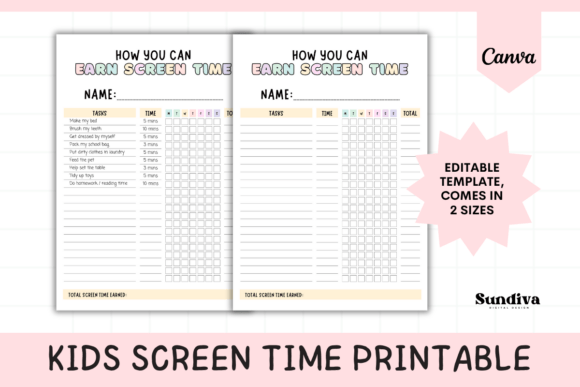
Manage Screen Time Effectively with This Canva Chart
As a designer and parent, I know the daily struggle of balancing digital engagement with offline responsibilities. We want to give our kids the freedom to explore technology, but we also need a framework that prevents it from consuming their day. That’s where the Editable Kids Screen Time Canva Template comes in. This isn't just a chart; it's a visual system designed to teach responsibility, provide clear expectations, and reduce the daily negotiations that happen around screen time.
The core of this template is its structured layout. It’s built around clarity and routine. You’ll find dedicated columns for Name, Tasks, and Time, which lets you customize it for each child and their specific daily or weekly responsibilities. The real game-changer is the inclusion of M–S checkboxes. This turns abstract goals into a tangible, day-by-day tracking system. Kids can physically check off their progress, which is a powerful motivator. At the end of the week, the Total and Total Screen Time Earned columns provide a clear, unambiguous result. It’s a simple cause-and-effect system: complete your tasks, earn your time. This structure is perfect for parents, teachers, and caregivers who want to foster independence and accountability in a kid-friendly way.
Designing for Clarity and Kid-Friendly Appeal
When I approach a project like this, my priority is the user experience—for both the adult setting it up and the child using it. The Editable Kids Screen Time Canva Template excels here. Its visual style is clean, organized, and intentionally simple. This isn’t about flashy graphics; it’s about creating a premium font and layout system that is instantly understandable. The typography and spacing are chosen to be highly legible, ensuring that a quick glance is all it takes to see the week's status. This kind of modern typography and thoughtful editorial design makes the chart a tool, not a distraction.
The real power is in its adaptability. Because it’s an editable Canva template, you’re not stuck with a one-size-fits-all design. You can easily adjust the color palette to match your child’s interests or your home’s decor. The typeface used is friendly and approachable, but you could swap it for a sans serif font for an even cleaner look or a handwritten font to make it feel more personal. This flexibility means the template can grow with your family. For a younger child, you might add small icons or images. For an older kid, you could add columns for more complex chores or reading goals. It’s a design asset that serves as a foundation for your own creativity.
Practical Applications Beyond the Home
While this is a fantastic tool for family management, its utility extends far beyond. As a small business owner or marketer, think about how this structured, visual approach to tracking can be applied. Teachers can adapt it for classroom behavior or homework tracking. Therapists or tutors could use it to monitor practice schedules. Even in a small business context, this kind of clear, checkbox-driven system can be adapted for simple project management or habit tracking for teams.
The template’s design principles are rooted in solid brand identity and web design fundamentals: clarity, consistency, and user-centric functionality. When you download the template, you get a PDF file with a direct link to edit in Canva. It comes in both US Letter size (8.5" x 11") and A4, ensuring it prints perfectly no matter where you are. Remember, you’ll need a free Canva account to edit it, and a computer is highly recommended for the best experience. This is a digital product, so you can start using it immediately after purchase.
Integrating the Template into Your Routine
The key to making any system work is consistency. I recommend printing the Editable Kids Screen Time Canva Template and placing it in a high-traffic area, like the kitchen. At the start of the week, sit down with your child and fill in the tasks together. This collaborative approach gives them ownership. As they complete each task, have them check the box. At week’s end, calculate the total together. This ritual reinforces the connection between effort and reward.
For those who are crafters or hobbyists, consider this a starting point. You could laminate the printed chart and use dry-erase markers for a reusable version. Or, import the Canva file into a program like Procreate to add your own custom illustrations. The goal is to create a system that feels supportive, not punitive. This template provides the perfect, professional-grade structure to do just that, helping you balance chores and play while keeping screen time a positive part of your child’s day.